
 EN
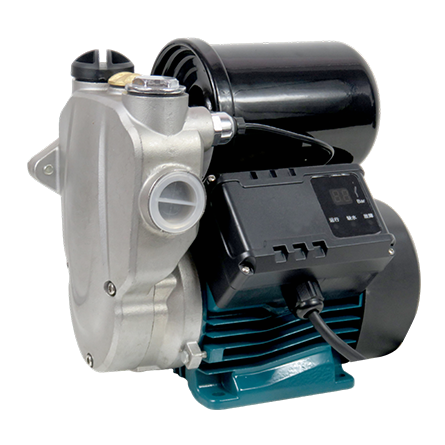
Comprehensive Guide to Selecting a Booster Pump
Dealing with weak water pressure at a facility tap or an irrigation nozzle is frustrating, but rushing to choose the biggest motor on a catalog page is a recipe for operational disaster. A booster pump performs far more reliably when it is selected and sized for a precisely defined duty point: balancing the exact flow rate the system requires, the pressure available at the inlet, the pressure needed at the farthest outlet, and all the frictional losses occurring in between. From an experienced pump selection adviser’s viewpoint, these concrete site conditions matter infinitely more than an attractive maximum catalog number.
This comprehensive guide gives contractors, facility maintenance teams, equipment distributors, and project buyers a practical, step-by-step framework to select a booster pump correctly. It is intentionally designed as an engineering framework rather than a universal promise that one specific configuration will suit every multi-story building, agricultural irrigation line, or industrial process-water system.
Uncovering Why System Pressure Is Low
Before attempting to size or purchase a booster pump, technicians must identify the root cause of the pressure restriction. Municipal supply pressure might drop significantly during peak morning or evening hours, an overhead water storage tank might sit too low relative to demand points, long underground pipe runs could create excessive friction losses, or a recent facility expansion might have dramatically increased peak water flow. These diverse problems look identical at an outlet faucet, but they demand completely different equipment solutions.
Facility teams should record inlet pressure while the plumbing system is completely idle and while it is serving a realistic operating load. Note precisely when pressure complaints occur. A pressure drop happening exclusively during simultaneous fixture usage points toward a flow-and-pipework bottleneck, whereas a consistently weak inlet supply often calls for a booster pump paired with specialized suction-side safeguards. Never assume the pump itself is defective until the incoming supply and distribution piping are thoroughly understood.
Calculating the True Duty Point
A booster pump must be matched meticulously to a specific operating duty point, not to horsepower ratings alone. Start by calculating the required flow rate during peak demand periods. For a commercial building, this represents probable simultaneous fixture demand rather than the mathematical sum of every single outlet. For agricultural irrigation or fluid transfer work, it equates to the total flow needed across the active sprinkler layout during the busiest operating zone.
Next, calculate the total dynamic head or pressure required at the pump discharge flange. This calculation must include the minimum pressure required at the most remote outlet, vertical elevation gain from the pump to that outlet, and friction losses through pipes, elbows, tees, check valves, filters, and water treatment equipment. Established pump-sizing references consistently integrate flow, pressure, total head, and electrical power together. The motor size naturally follows the hydraulic requirement; it never defines it.
| Evaluation Parameter | Primary Calculation Focus | Key Operational Impact |
| Inlet Pressure | Available municipal or tank supply head | Prevents cavitation and suction starvation |
| Peak Flow Rate | Simultaneous fixture or zone demand | Determines correct hydraulic sizing |
| Total Head | Elevation, friction, and terminal pressure | Defines required pump pressure generation |
| Control Strategy | Variable speed vs. pressure switch cycling | Controls energy use and pressure stability |
As a helpful mental model, treat the building distribution network like a journey with multiple toll booths. The booster pump must provide sufficient hydraulic energy to cover the vertical elevation rise, the frictional resistance of the entire route, and the terminal pressure still required at the final destination. If any single toll is omitted from the calculation, the selected unit may look adequate on paper yet deliver disappointing performance in daily operation.
Reading Manufacturer Curves Correctly
Once the target duty point is established, compare it directly against the manufacturer’s performance curve for each candidate booster pump. Look for a model where the required flow and head intersect comfortably near the center of the intended working region, rather than sitting precariously at the extreme end of the curve. A unit that reaches performance targets only under optimistic, best-case assumptions about pipe friction will often run noisily, vibrate excessively, or fail to maintain stable pressure when facility demand spikes.
This represents one of the most common selection mistakes in the industry: buyers focus exclusively on the largest headline head or maximum flow value printed on a spec sheet. Those maximum values usually sit at opposite, unusable ends of the performance curve. A booster pump generates a specific head at a specific flow, meaning buyers must always request the full curve and check the actual intersection point against system demand. In short, a larger motor does not automatically yield a superior pressure result.
Safeguarding the Suction Inlet Side
A booster pump can successfully raise discharge pressure downstream, but it can never manufacture water or fix a starved source. Engineers must confirm the minimum inlet pressure, available flow volume, liquid temperature, water quality, and the physical distance from the primary source. If the incoming suction line is restricted or undersized, installing a larger pump will only worsen pressure drops on the suction side rather than improving delivery at the outlets.
Ask whether the incoming supply can sustain the intended flow without causing excessive inlet starvation. This evaluation includes inspecting strainers, water meters, isolation valves, and pipe diameters. Where a system draws water from an unpressurized storage tank or a fluctuating municipal main, incorporating low-pressure cutoffs, dry-run protection, or a tailored control arrangement is essential. Local building codes and manufacturer documentation should always guide these protective measures.
Matching Controls to Dynamic Demand Patterns
The integrated control package is often just as critical as the core hydraulic selection. A small, intermittent residential demand requires a completely different control approach compared to a bustling hotel, a multi-story apartment complex, an extensive agricultural irrigation zone, or an industrial process line. Pressure switches, bladder tanks, variable-frequency drives, and multi-pump staging manifolds dictate how smoothly a booster pump starts, stops, and maintains constant pressure.
For applications experiencing wide demand fluctuations, a variable-speed booster pump system helps maintain rock-solid outlet pressure by modulating motor speed rather than repeatedly cycling on and off at full output. However, this is not a universal solution: operators must verify the duty range, electrical supply compatibility, control support, and local maintenance capabilities. For predictable, steady demand profiles, a simpler fixed-speed control arrangement is often easier to service and entirely appropriate.
Achieving long-term operational success requires meticulous planning, precise hydraulic calculations, and robust hardware designed for demanding fluid environments. By prioritizing system-wide resistance mapping, correct installation details, and rigorous commissioning, facility operators can eliminate chronic noise and efficiency losses. For industrial operations seeking reliable pumping equipment and comprehensive manufacturing support, Flyaway delivers advanced booster pump solutions engineered to meet rigorous global standards.






